


.png)
Beginner’s Guide to Starting Your Soapmaking Journey (with Expert Tips)
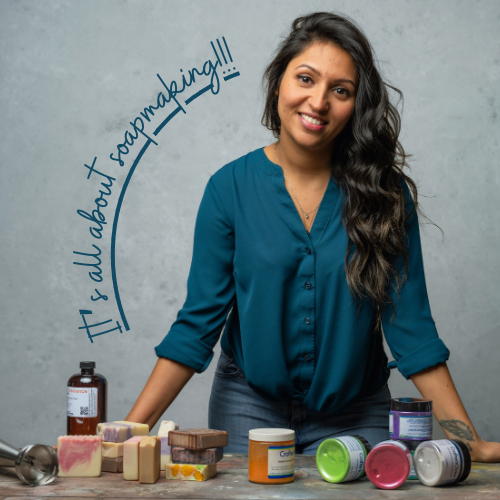
If you’ve ever thought about making your own soap but felt overwhelmed or unsure where to start, you’re not alone. I’ve been there too.

I started soapmaking around the end of 2017, during a very stressful time in my life. I needed something to help me relax, something creative to take my mind off things—and soapmaking became that for me. What started as a simple stress-relief hobby quickly turned into something I truly enjoyed and eventually built experience in over the years.
My very first soap was a 100% olive oil cold process soap. I won’t lie—it was a little scary at first, especially handling lye. But once I made that first batch, I felt so proud. That moment made me realize: this is actually something you can do at home, and it’s not as complicated as it seems.
Now, after years of experience, I want to help you get started the right way—without overcomplicating it. You will see some links in this blog- Some are the links to my tutorials on YouTube to help you with the free soap recipe and the process. Other links are Amazon links to help you collect the tools and ingredients related to the soapmaking process. Amazon links are the affiliate links- I get a small commission if you will use my links to make purchases. It does not affect your pricing in any way. Now, let's get to it!
What Beginners Get Wrong (And How to Avoid It)
Over the years, I’ve noticed two types of beginners:

1. The Overthinkers
They’re scared of lye, so they keep researching… and researching… and never actually start.
2. The Shortcut Seekers
They just want a free recipe and jump in without understanding the basics.
Both approaches can hold you back.
Yes, lye can sound intimidating—but once you handle it properly the first time, that fear goes away.
But also, soapmaking is chemistry. You can’t just swap ingredients randomly and expect it to work.
👉 My biggest advice: Don’t overthink, but don’t skip the basics either. Learn just enough to understand what you’re doing—and then start.
First, Ask Yourself This Question
Before you even buy anything, ask yourself:
👉 Do you care more about designs… or ingredient control?
If you love creativity and designs:
Go for melt & pour soapmaking
Easy to start
No lye handling
Endless design possibilities
Great for beginners
If you care about ingredients and formulation:
Go for cold process soapmaking
Full control over what goes into your soap
More natural customization
Still creative, but in a different way
There’s no “right” choice—just what fits your goal.
What You Actually Need to Start (No Overbuying!)
Let’s keep this realistic.
Cold Process Soap – Essentials

Stick blender - this one is my favorite
Heat-safe containers (preferably #5 polypropylene)
Digital weighing scale (very important)
Lye + oils (like olive oil, coconut oil, etc.)
Mold (or even a simple box lined with plastic)

Safety (Non-Negotiable)
Full sleeves + covered shoes
Melt & Pour – Essentials
Fragrance + color (optional)
kitchen thermometer or Infrared thermometer.
What You DON’T Need (at the beginning)
Fancy molds
Expensive oils
Tons of colors
Complex tools
When I started, I literally used yogurt containers and an Amazon box as a mold. Start simple—you can always upgrade later.
How to Make Your First Cold Process Soap

Here is a very beginner friendly cold process soapmaking tutorial with a free soap recipe - https://youtu.be/XOKMxde1qpI?si=yPqXtnR_gQFRM9qb
Here’s a simplified version of the process:
Pick a recipe (start simple)
Get all materials ready + wear safety gear
Prepare your workspace (no distractions!)
Measure everything carefully (by weight)
Mix lye + water (in a ventilated area)
Let it cool
Combine with oils (90–100°F range)
Stick blend until trace
(Optional) Add fragrance/color
Pour into mold
Unmold after 48–72 hours
Cure for 4–6 weeks
👉 Take it slow, stay focused, and don’t rush the process.
How to Make Melt & Pour Soap (The Easy Way)
Here's a very beginner friendly Melt & Pour soapmaking tutorial with measurements - https://youtu.be/nKJpnQZ33w0?si=ZZqEmblicZBhS7k9

Cut soap base into chunks
Melt in microwave (short intervals, don’t overheat!)
Add color + fragrance
Pour into mold
Spray alcohol to remove bubbles (optional)
Let it set
💡 Tip: Wrap finished soaps in plastic to avoid glycerin dew.
Common Mistakes to Avoid
Cold Process Soap Mistakes
1. Using the Wrong Fragrance Oils- One of the biggest mistakes beginners make is assuming any fragrance oil can be used in soapmaking. That’s not true.
Related YouTube video- https://youtube.com/shorts/2Wq5gtkEZSE?si=QHEc_lQe-tlma1Fs
Not all fragrance oils are designed for cold process soap, and using the wrong one can:
Seize your batter (it thickens instantly)
Ruin your design
Affect the final texture of your soap
👉 Always:
Buy from a reputable soap supplier
Check if it’s labeled safe for cold process soap
Read reviews about how it behaves (acceleration, discoloration, etc.)
2. Ignoring IFRA Usage Rates-Even if a fragrance oil is safe for soap, you can’t just guess how much to use.
Every fragrance and essential oil has a recommended usage rate (IFRA guideline).If you use too much, it can:
Irritate skin
Make the soap unsafe
👉 Always check the IFRA percentage and measure accordingly.
3. Not Checking for Vanilla Content- This is something beginners often don’t realize.
If your fragrance contains vanilla, your soap can turn brown over time—even if it looked perfect when you poured it.
👉 So before using a fragrance oil:
Check if it contains vanilla
Decide if you’re okay with the color change
Watch this video on how to pick a fragrance oil for your cold process soaps- https://youtu.be/WweKn0Zxguc?si=73F4l-E58RtOoFjh

4. Randomly Swapping Oils in Recipes- This is a big one.
Soapmaking is not like cooking where you can substitute ingredients freely. Each oil has a different saponification value, meaning it needs a specific amount of lye.
Here's a video version of the same- https://www.instagram.com/reel/DN-ueeAkWCN/?utm_source=ig_web_copy_link&igsh=MzRlODBiNWFlZA==
If you swap oils without recalculating:
Your soap can become too harsh (lye-heavy)
Or too soft and unusable
👉 If you want to make changes:
Run the recipe through a soap calculator
Or stick to tested beginner recipes
Melt & Pour Soap Mistakes
1. Overheating the Soap Base- This is the most common mistake in melt & pour.
It might seem harmless, but overheating can:
Burn the soap base
Change its texture
Affect how it sets
👉 Best practice:
Heat in short intervals (20–30 seconds)
Stir in between
Keep temperature around 120–150°F (or as recommended)

2. Not Following Manufacturer Instructions- Every soap base is slightly different.
Beginners often skip reading instructions, but those guidelines tell you:
Ideal melting temperature
Maximum heat tolerance
Fragrance limits
👉 Always check the label before you start.
3. Adding Too Much Fragrance- In melt & pour, more fragrance does not mean better soap.
Most bases can only handle about 1–3% fragrance. Adding more can:
Make the soap too soft
Cause sweating or separation
👉 Stick to recommended percentages and measure properly.
A Small but Important Tip
For both methods, one thing I highly recommend adding to your toolkit is an infrared thermometer.

It helps you:
Stay within safe temperature ranges
Avoid overheating
Work more confidently
Final Thoughts: Just Start
If you’re still hesitant, here’s what I’ll say:
👉 Just try it.
Whether it’s melt & pour or cold process, once you make your first soap, you’ll feel proud—and you’ll want to do it again.
Soapmaking is:
Creative
Relaxing
Functional (you actually use it!)
You don’t need perfect conditions. You don’t need expensive tools.
You just need to start.
Your Next Step
Answer this:
👉 Do you want design freedom or ingredient control?
Pick your method
Start with a simple batch
Don’t overthink
If you want guidance:
Watch my tutorials on YouTube
Or join my soapmaking classes in New Jersey
Or reach out for one-on-one learning
📩 Email: geeta@thecraft.space
If you’ve been waiting for the “right time”—this is it.
Start small. Start simple. But start. ✨

Comments